

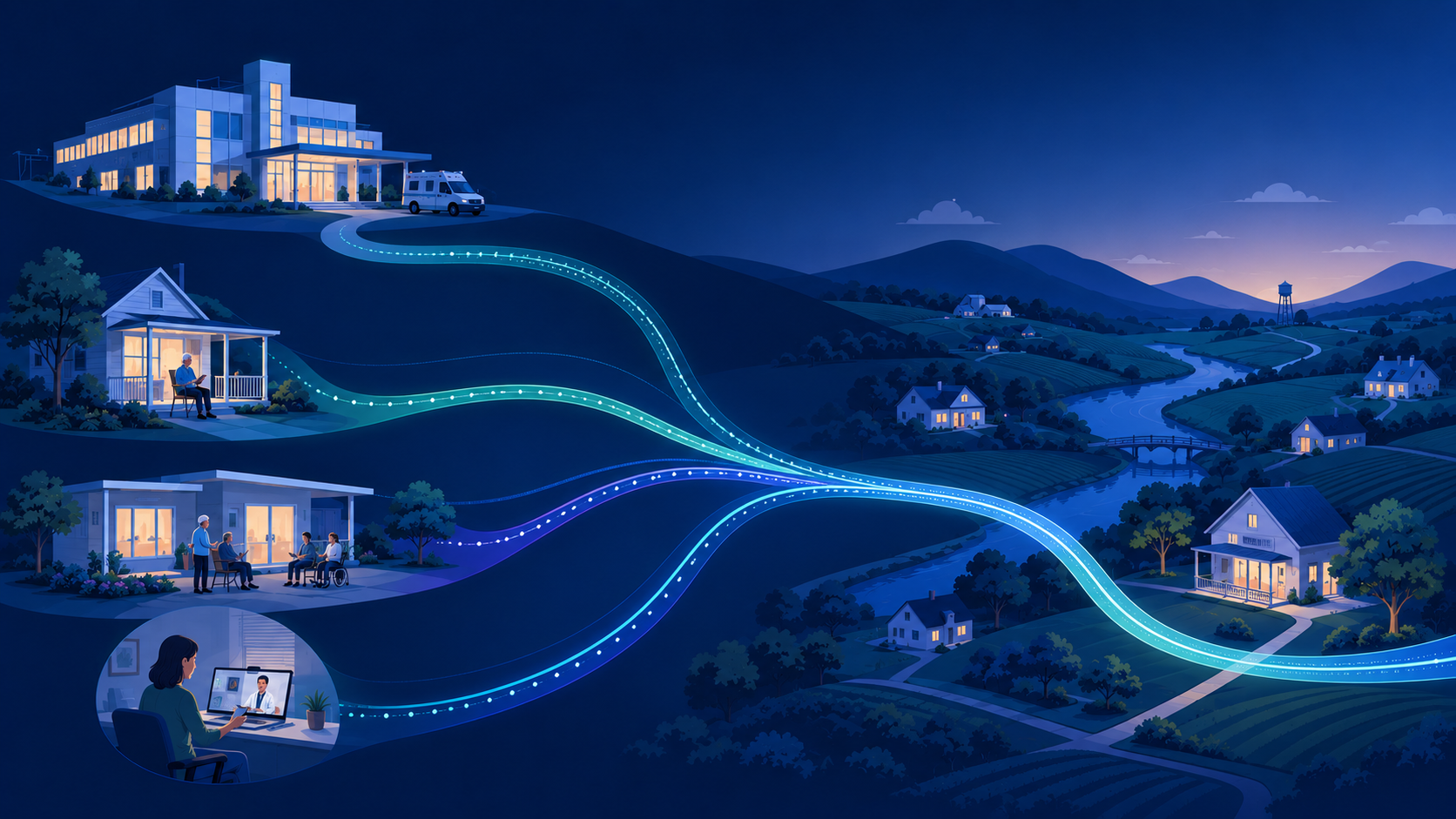
The Rural Health Transformation Program is giving states a rare opportunity to rethink how healthcare is delivered across rural communities. Over five years, states will use $50 billion to expand access, strengthen the workforce, modernize technology, and create more sustainable delivery models. The program is not simply intended to support the care rural organizations already deliver; it is designed to help states create more sustainable, technology-enabled models for the future.
States can and should use this funding to introduce new solutions that address urgent rural health needs. At the same time, they should prioritize creating infrastructure that connects those investments. Building an orchestrated Rural Health Transformation foundation ensures that each new program becomes part of a coordinated rural care system rather than another isolated experience.
Because this funding is time-limited, states also need to consider what will remain when the program ends. Individual initiatives may address immediate priorities, but a shared orchestration foundation allows those investments to keep working together, evolve over time, and support new programs without requiring rebuilding from scratch.
Point Solutions Need a Shared Foundation
A telehealth platform can expand access to specialists, while remote monitoring can help manage chronic disease. Point solutions like these offer real value for rural communities, but without a shared foundation, each one can just become another tool that patients and care teams must navigate separately (and may eventually abandon).
That risk is especially high in rural communities, where care is delivered across a myriad of local hospitals, community clinics, regional systems, and community organizations. These groups often use different EHRs and digital tools, and most have limited resources for new IT projects.
Adding more standalone technology to these environments can deepen fragmentation. Patients may receive conflicting outreach or lose track of referrals between organizations. Care teams may not know whether someone completed their next step. Meanwhile, patients manage more logins, and staff spend more time answering phones and coordinating care manually.
Rural healthcare needs new capabilities, but it also needs a common foundation that brings them together. That’s where experience orchestration changes the equation. States don’t have the luxury of starting with years of technology consolidation. An orchestration platform can help them move sooner by connecting the systems, services, and organizations already serving rural communities, while creating a foundation that becomes more capable over time.
The Vision: One Connected Rural Health Experience
A statewide experience orchestration platform creates a common identity, engagement, and coordination layer across participating care sites. Instead of requiring every organization to adopt the same clinical system, the state can connect technology already in place. Each organization is able to keep its own EHR, brand, and patient relationships.
For patients, this creates one connected digital experience for finding care, receiving personalized guidance, and completing their next steps. For care teams, it provides a clearer view of the care journey even when a patient receives services from several organizations.
This shared foundation can:
- Give patients a trusted place to access local, regional, and virtual care.
- Connect existing EHRs, scheduling tools, digital services, and community resources through one secure identity.
- Personalize the next best action based on care gaps, referrals, and journey progress.
- Coordinate outreach and track whether recommended care is completed.
Consider a patient in a rural setting managing diabetes. Instead of navigating separate digital tools for primary care, labs, and nutrition support, the patient can see one coordinated journey that explains what to do next and connects each step. If a screening is overdue, the platform can identify an appropriate location, support scheduling, and confirm completion. If a referral moves from a local clinic to a regional or virtual provider, the local care team can remain informed.
This digital experience doesn’t have to depend on a new app. States can engage residents through the channels that work best in each community, including web, patient portals, and SMS, while maintaining a consistent identity and journey behind the scenes.
Orchestration doesn’t require states to replace existing technology or consolidate every rural organization onto one portal. Independently operated systems can function as a coordinated ecosystem while local providers preserve their investments and patient relationships.
Once the foundation is established, successful journeys can be shared across regions. A program developed by one rural hub can be adapted by another without forcing each organization to start from scratch, accelerating implementation while leaving room for local needs.
Turning Orchestration Into Lasting Transformation
The opportunity extends beyond just a better digital experience. Orchestration can reduce manual outreach and help care teams quickly see which patients need support. Self-service tools and closed-loop referral tracking allow care managers to focus on higher-risk patients instead of repeatedly checking routine steps.
It can also help states get more value from their data investments. Many strategies appropriately emphasize interoperability and data sharing, but connected data does not automatically create connected care. Knowing that a patient has an open care gap is not the same as helping that patient close it. Data infrastructure shows what needs to happen; experience orchestration helps make it happen.
Over time, a shared platform creates a more durable return on Rural Health Transformation funding. New solutions can be added as priorities change, and technology partners can be replaced without rebuilding the core patient experience. States can also measure access, referral completion, and other outcomes through a common framework instead of reconciling results from disconnected pilots.
Sustainability isn’t only about keeping individual programs funded, it’s also about creating infrastructure that makes every future program easier and less expensive to launch. When identity, engagement, coordination, and measurement are already in place, states can introduce new services without rebuilding the patient experience each time.
Praia Health provides the patient experience orchestration layer that connects health systems, community organizations, and digital solutions across the rural health ecosystem. Praia works with the technology that organizations already own, creating a common foundation without requiring rural providers to replace their EHRs or give up their brands and patient relationships.
We are already talking with several states about how this model can support their Rural Health Transformation plans. If your state is deciding how to turn new investments into a lasting statewide foundation, we would welcome the opportunity to start that conversation. Reach out to Praia Health to explore what experience orchestration could look like for your state.